Ark 16418 Mag1212764 V0001Ark 16418 Mag1212764 V0001
©Ark 16418 Mag1212764 V0001|Musée d'Art et d'Histoire de Granville
Historya seaside property development

100 years of the Plage Normande

Known today for its pretty seaside villas and Blue Flag beach, Donville-les-Bains has a much longer history. Discover how this small fishing and farming village has been radically transformed in the space of just a few years, under the impetus of a single project: the Plage Normande.

Donville

before the Plage Normande

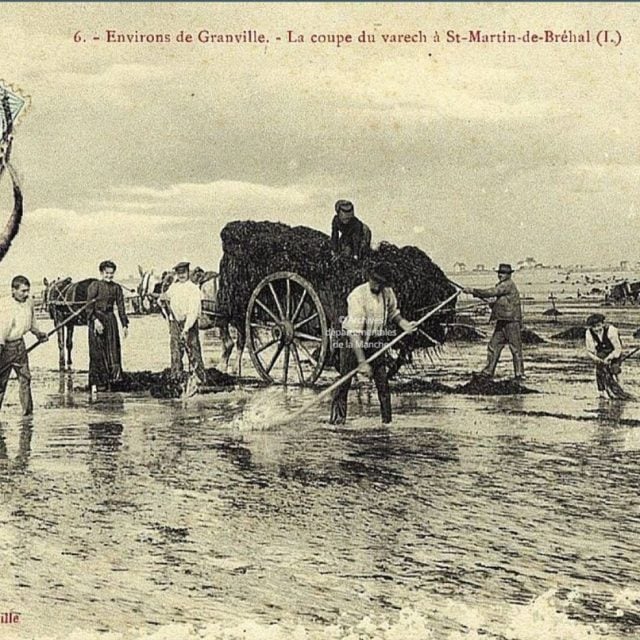
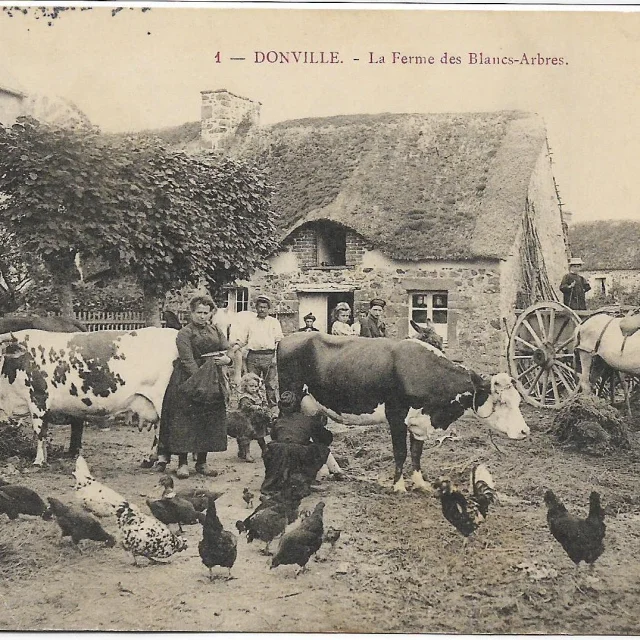
Contrary to what it may seem at first glance, Donville-les-Bains has a history stretching back thousands of years. Gallo-Roman settlements can be traced back to the 1st century AD. Throughout the Middle Ages and the Modern Era, maritime and agricultural activity flourished. In addition to the seven fisheries set up on the foreshore (of which only two remain), and the vast stretches of grass along the coast where livestock graze, Donville is above all renowned for its kelp. This greenish-brown seaweed, which can be used as a fertiliser, is found in abundance and of excellent quality on the beaches of Donville. Even at the end of the 19th century, the exploitation of kelp remained the village’s main source of activity and wealth. At the same time, however, an upheaval was in the making: a veritable “rush to the sea” began among the middle classes of several large towns, who were captivated by the fashion for sea bathing. Hotels, restaurants, casinos and seaside villas sprang up all along the coast: Dieppe, Le Havre, Granville… Donville remained in the background, with the exception of a few isolated villas.
The Plage Normande project,

Donville transformed

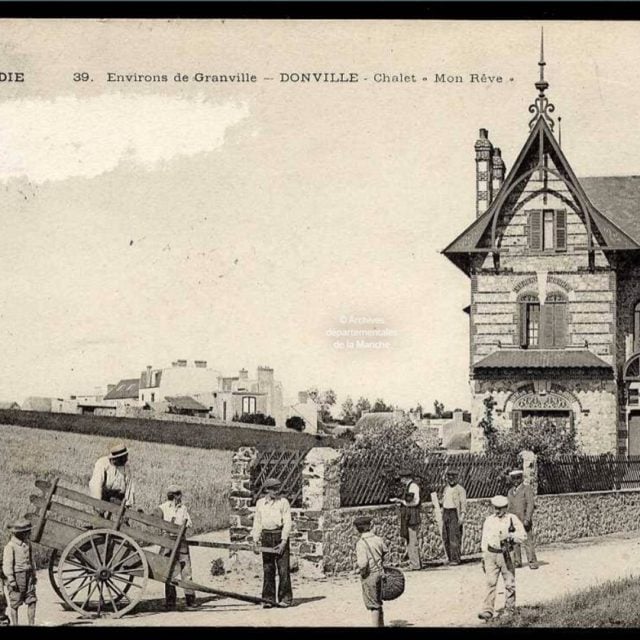
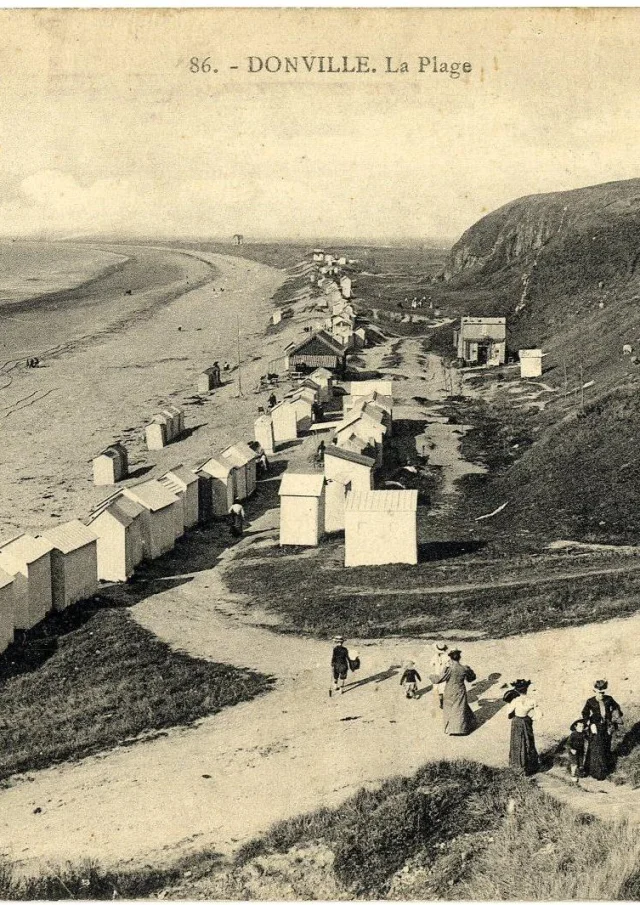
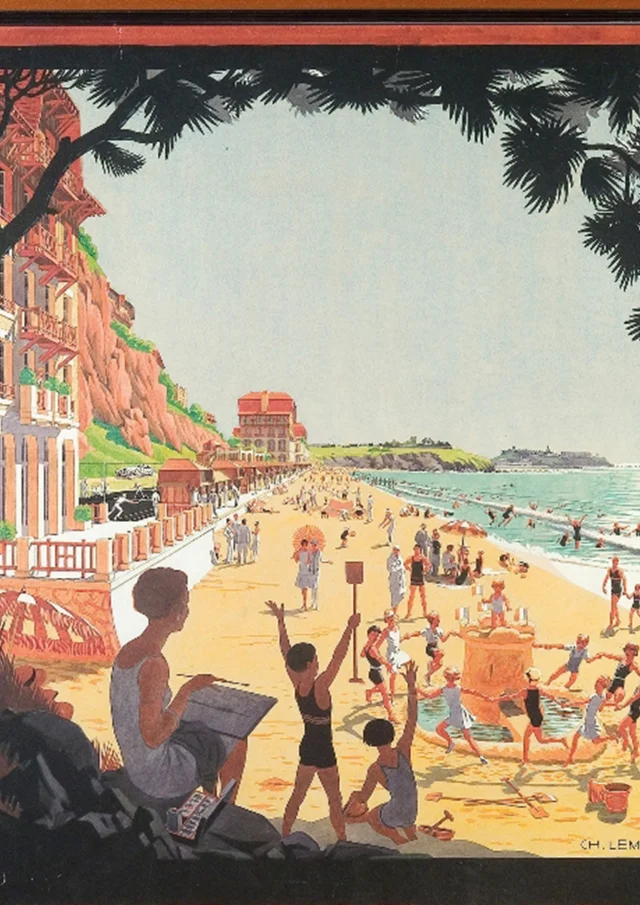
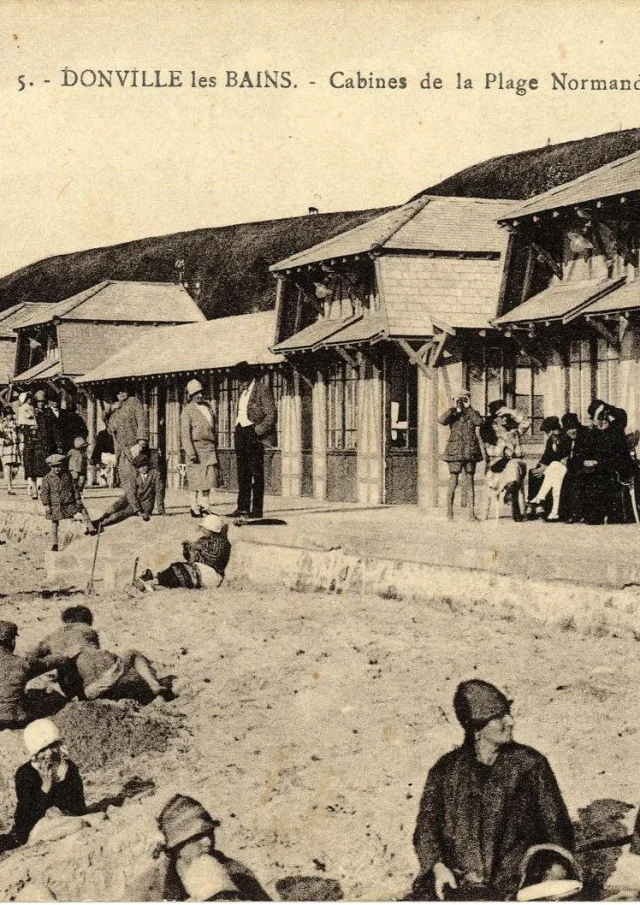
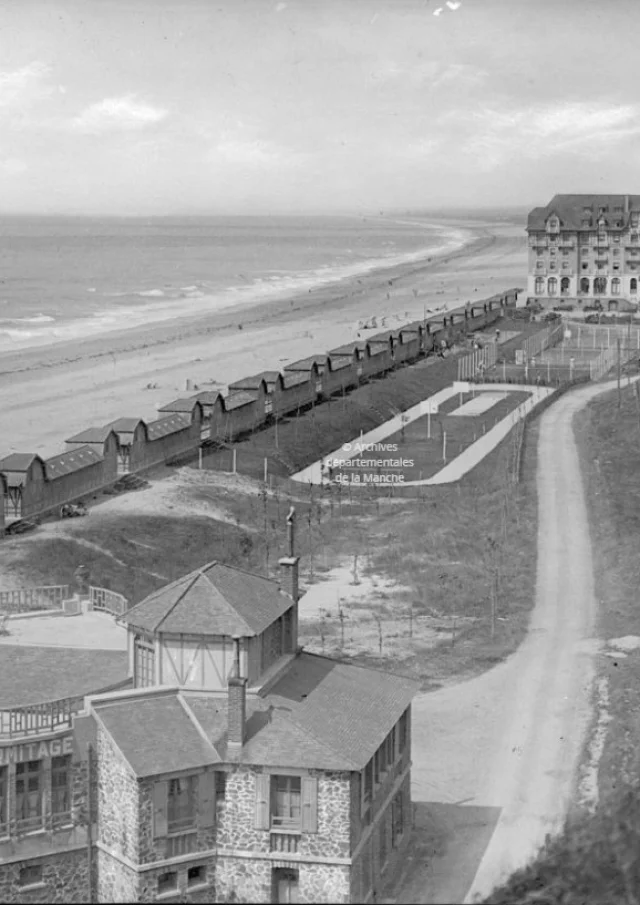
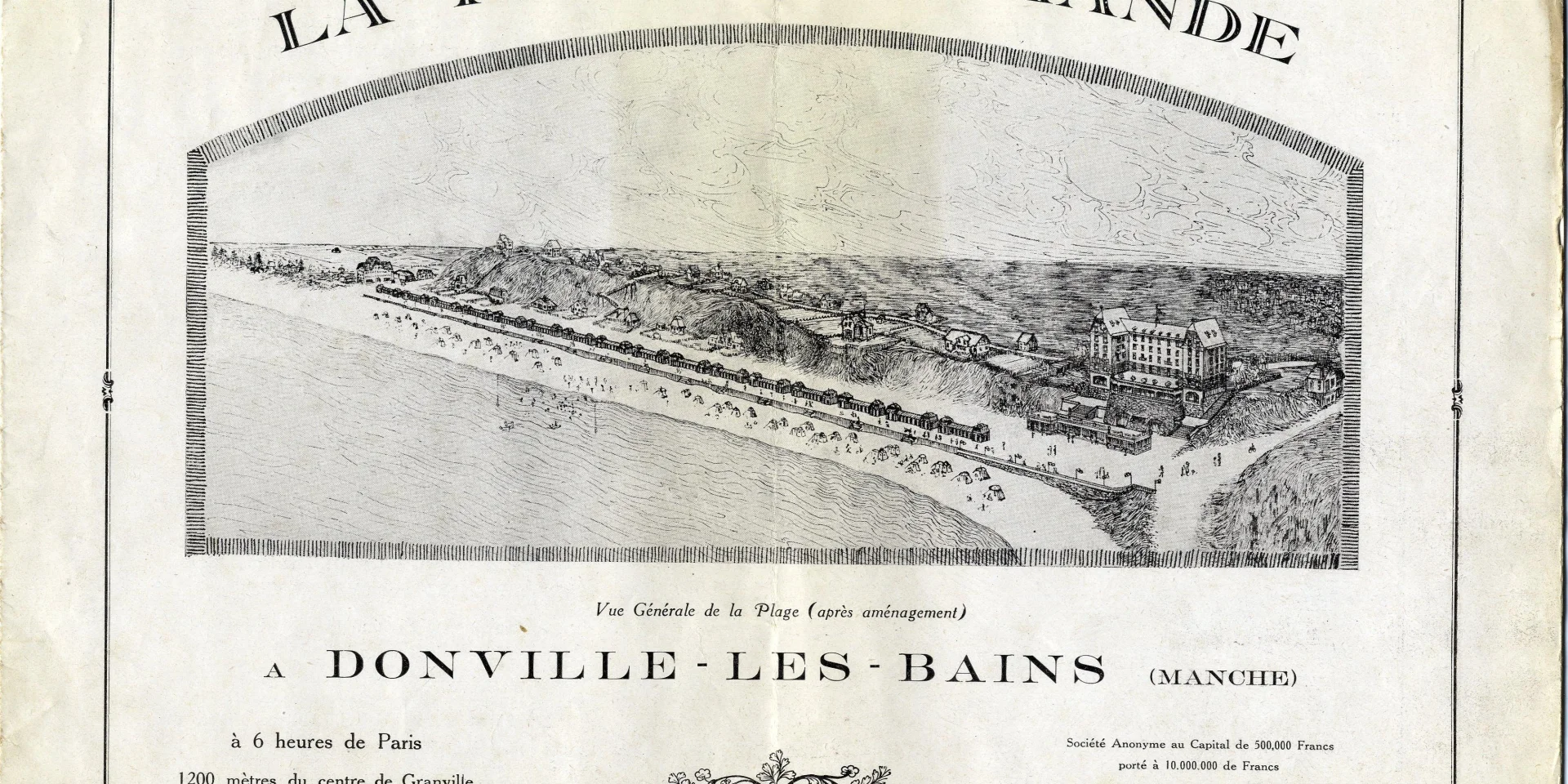
1924: this was the year of major change for Donville, which had been given the suffix “les Bains” a few years earlier to encourage tourism. At this time, a Parisian company of property developers was formed, under the name of “Plage Normande“. Its chairman, Charles-Léon Flaus, got the project off the ground by building the very first 468-metre seawall along the coast. Over the next two years, two new buildings were added to the Plage Normande: At the southern end of the seawall, a bar-restaurant, “la Potinière”, and at the northern end, the Hôtel “de l’Ermitage”. Between the two, a line of beach huts was built. The complex was completed by several tennis courts, a small children’s stadium and several seaside villas at the top of the cliff, all built by the Plage Normande company. Many of these buildings are in the neo-Norman style that is all the rage on the region’s coasts, with timber-framed walls, turrets and bow-windows reviving the fantasy charm of wild, picturesque old Normandy. But to attract customers, the magic had to be taken a step further: electricity and hot water were brought to the coast. This was the point of no return for Donville-les-Bains, which had gone from being a rural village to a booming seaside resort attracting yachtsmen from all over France.

Consequences

of an excessive project

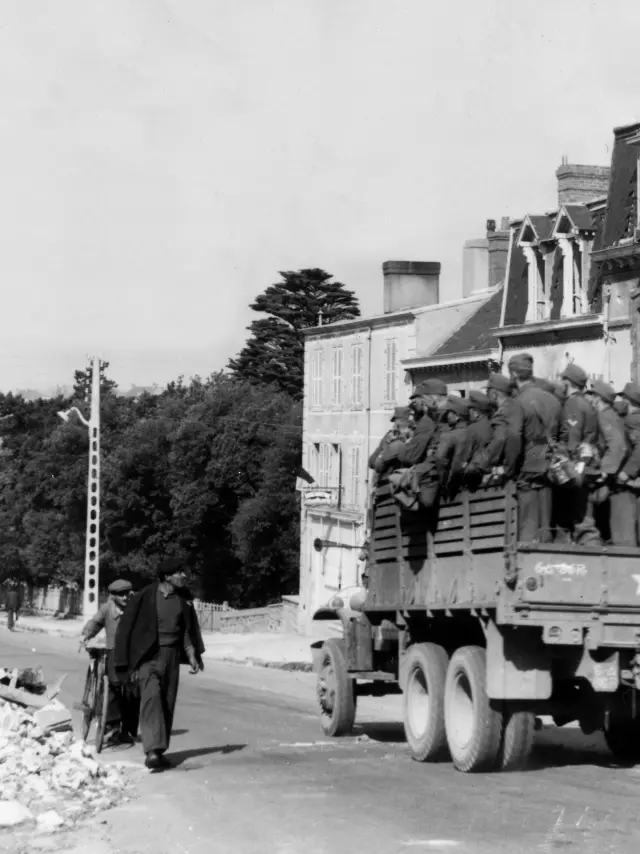
La Plage Normande remained unfinished. The casino dreamed of by Charles-Léon Flaus was never to see the light of day: the economic crisis of 1929, followed by the Second World War, were to put paid to this little utopia. Tourism came to a screeching halt, the beach cabins were destroyed by a mine explosion, the Potinière was barely recognisable, and the Hôtel de l’Ermitage became first a refuge for war victims, then a private residence. Nevertheless, the infrastructure built by the company paved the way for Donville’s new boom. Electricity, hot water, trains: the village was at the height of comfort, attracting more and more private individuals who wanted to build their own villa. What’s more, the post-war period also saw the democratisation of paid holidays and the car: tourism in Donville opened up to a whole new section of the population. Today, the Plage Normande has reached its centenary. A century ago, this project changed the face of Donville forever. Since then, kelp has regained its place in the beach ecosystem, cattle and sheep have retreated to the bocage, and the only clues to the village’s long past are nestled between the old stones of the church. As you stroll along the path at the foot of the cliffs, you’ll find yourself transported into the imaginations of characters from the Belle Epoque, each trying to build their own paradise. On foot, by bike or in a wheelchair, discover the remains of this historic development, a major example of twentieth-century seaside architecture.


History and heritage

Discover our other nuggets