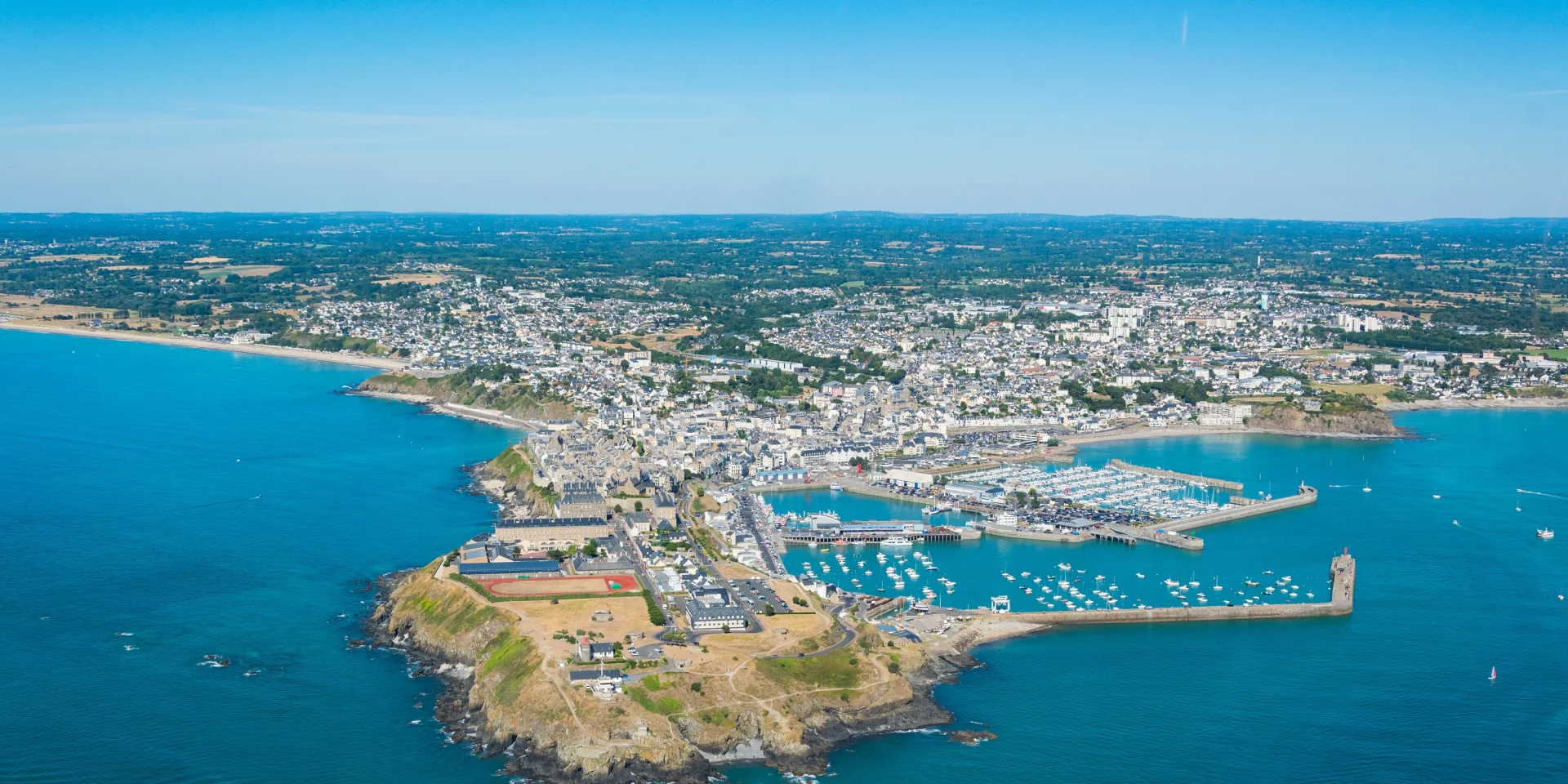
Granville Vue Du Ciel Credit Otgtm Julie Hurricane 36194 OkGranville Vue Du Ciel Credit Otgtm Julie Hurricane 36194 Ok
©Granville Vue Du Ciel Credit Otgtm Julie Hurricane 36194 Ok|Julie Hurricane
Saint-NicolasHistory of a town that became a district

The Saint-Nicolas district

A neighbourhood like no other

Now a district of Granville, Saint-Nicolas was originally a parish, a branch of Notre-Dame de Granville.

From the parish to the commune of

Saint-Nicolas

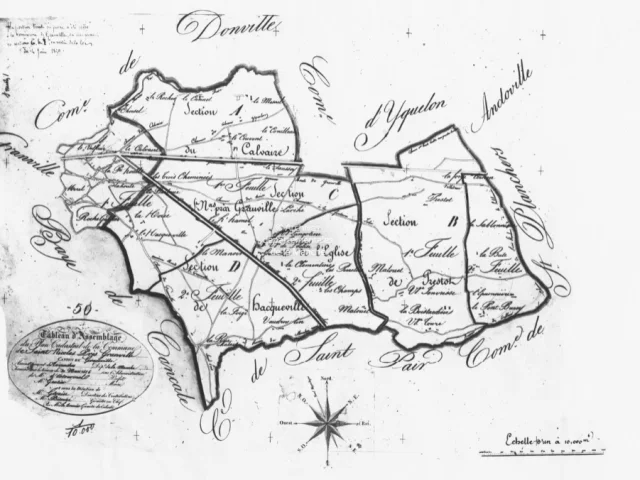
Following the French Revolution of 1789, the parish of Saint-Nicolas became a commune with the following administrative boundaries:

  • To the north, the river Boscq, which separated the communes of Saint-Nicolas and Granville.
  • To the south, the river “la Saigue” which formed the natural boundary between Saint-Nicolas and Saint-Pair-sur-Mer as far as the sea.
  • to the east as far as “le Pont Buret” separating Saint-Nicolas from Saint-Planchers.
  • to the west as far as the cliffs along the seafront.
Craft and industry

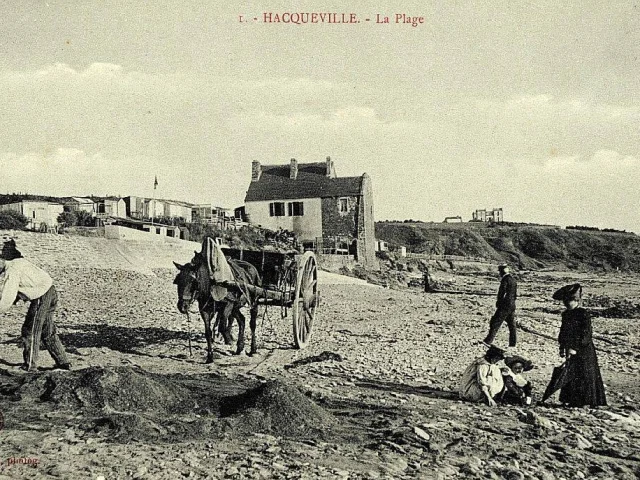
Until the last war, Saint-Nicolas was very active in the world of crafts and industry. Many small workshops and factories were located in the commune: candle factories, brickworks, rope-making and shipbuilding for Newfoundland. Because of the immediate proximity of the commune to the maritime city of Granville, many craftsmen did business with the great shipowning families of Granville. But Saint-Nicolas was also, and above all, a rural community: kelp and seaweed, collected from the beaches, were a major source of income for local families, and were extremely useful for fertilising the land. They were also used to create a kind of protective packaging for oysters, which were fished off Granville and then transported by oxcart to nearby markets. Even today, a number of buildings bear witness to the area’s rural past and thriving craft industry.

Grainville Castle

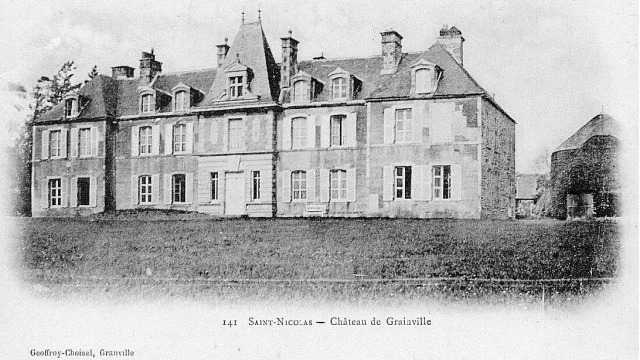
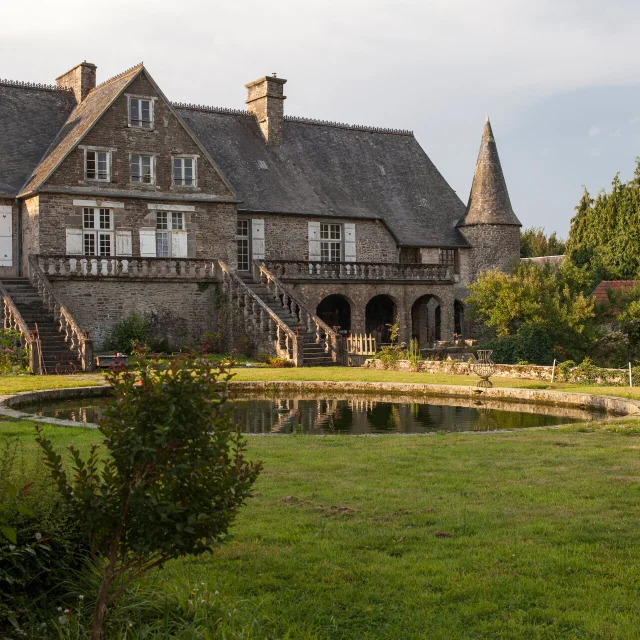
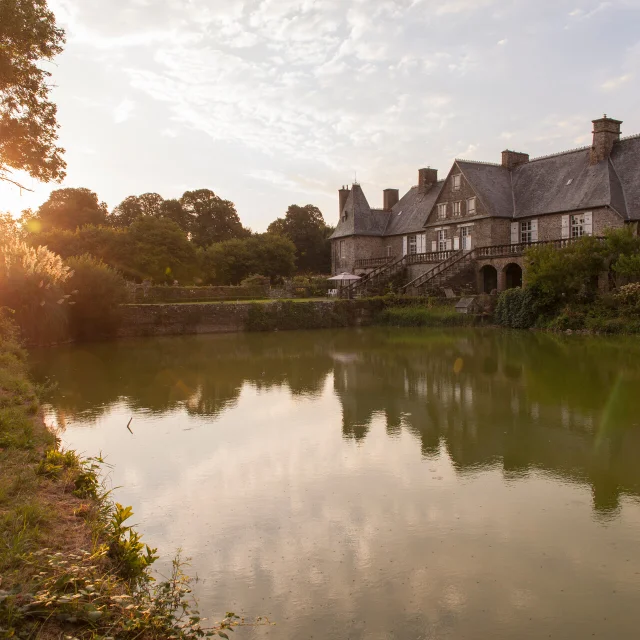
Château de Grainville, located on what is now the Route d’Avranches, was once a dependency of the Abbey of Mont Saint-Michel. In 1601, Louis de Péronne, Sieur de Canet et d’Hacqueville became the owner. His family, very influential in the Grande Pêche industry, used the château as a second home for almost 70 years, until the building was sold once again to another wealthy family of Granville merchants, the Picquelins. Thereafter, the building has been passed down from father to son, mother to daughter, right up to the present day. Over the 400 years of its existence, Château de Grainville has undergone many architectural changes: despite this, it has managed to preserve a typical 18th-century exterior style, whose imposing appearance is a reminder of the wealth and social power of the families who occupied it. Nestling in the heart of a large park, it is also surrounded by several small outbuildings, including the former church of Saint-Nicolas and a 14th-century dovecote listed as a Monument Historique. Today, the Granvillière remains in private ownership.

The church of Saint-Nicolas

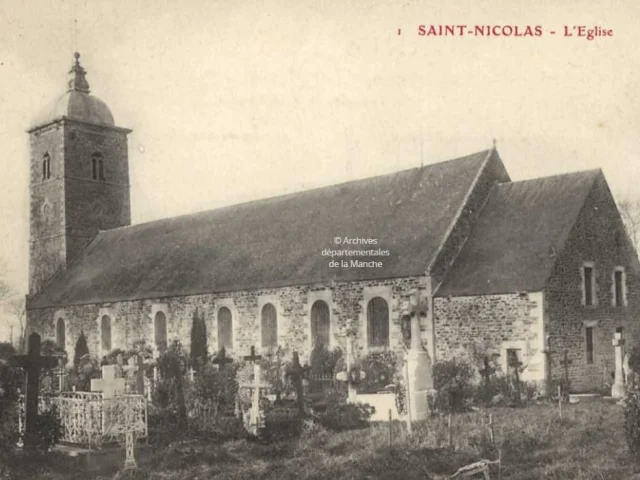
The present-day Saint-Nicolas church is relatively new in terms of the history of the commune, having replaced a previous church building in the 19th century that was deemed too small. Construction began in the spring of 1822, on the initiative of Mayor Louis-Jacques Épron de la Horie, and the site was quickly blessed in 1823, even though the work was not yet complete. The church had neither a bell tower nor a sacristy, which were not built until 1833. The church was very popular with the inhabitants of Saint-Nicolas, as well as with sailors : because of its height, it served as a landmark for sailors returning to port. It also attracted the wrath of the heavens on several occasions: in 1853, it was first damaged by lightning, then a second time in 1888, damaging the vault of the church.

The Dior factories

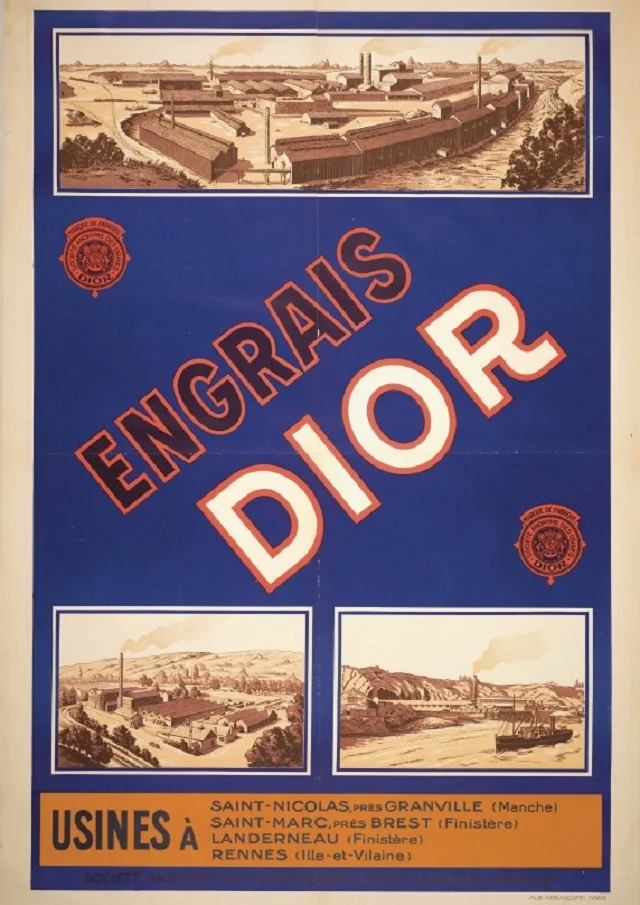
In the 1860s, the Dior factories were founded by Louis-Jean and his sons Louis and Lucien, under the name L. Dior Frères, to produce superphosphate and natural fertilisers. The Dior family was soon looking to set up in Granville, and the question of where to locate the company arose. In Granville, a request to build a tailings depot and artificial fertiliser factory was refused by the municipality in 1870. However, it was authorised in Saint-Nicolas-près-Granville, and the site was set up in 1873, not far from Granville station and on the border with Donville-les-Bains. The Dior factories quickly became the main source of work for the local population, and for 50 years were a major hub of local industrial activity. But in 1929, the economic crisis led to serious financial difficulties, prompting the Dior family to sell the company. Despite this, the plant continued to manufacture fertilisers until the early 1980s. From then on, the site only continued to bag products, until its definitive closure in 2007.

Château Bonheur

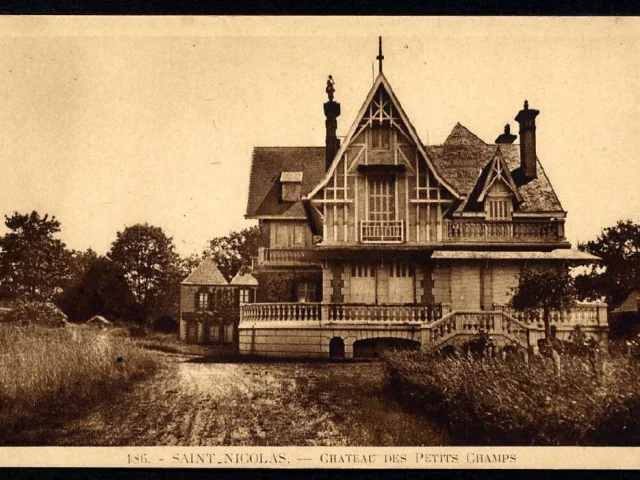
In 1920, Georges Bonheur bought the Pérelles property on the site of the current building. Already a shareholder in the Société des Chemins de Fer de la Manche, he founded the Société Hôtelière de Normandie in 1909. In 1924, he had a vast and elegant residence built to the designs of architect Auguste Bluysen (also architect of the Granville casino, inaugurated in 1911). In 1934, Gennevilliers town council bought the building to house the town’s holiday camp. After the Second World War, the property was transformed, with the construction of rooms, offices and an infirmary. Then in 2005, the town of Granville bought the property to house the leisure centre and music school. In 2021, the villa was sold and a reception area was built.

Saint-Nicolas

The neighbourhood

Saint-Nicolas remained an independent commune until 1962 : on 27 April of that year, a decree was published in the Journal Officiel announcing the merger of the towns of Granville and Saint-Nicolas, which now became a district of the maritime town. Despite its urban development, a more or less direct consequence of this merger, Saint-Nicolas has managed to retain many traces of its rural past. Many of the large mansions and small houses that characterised this former commune can still be seen today, and numerous footpaths invite visitors to explore the area.

History and heritage