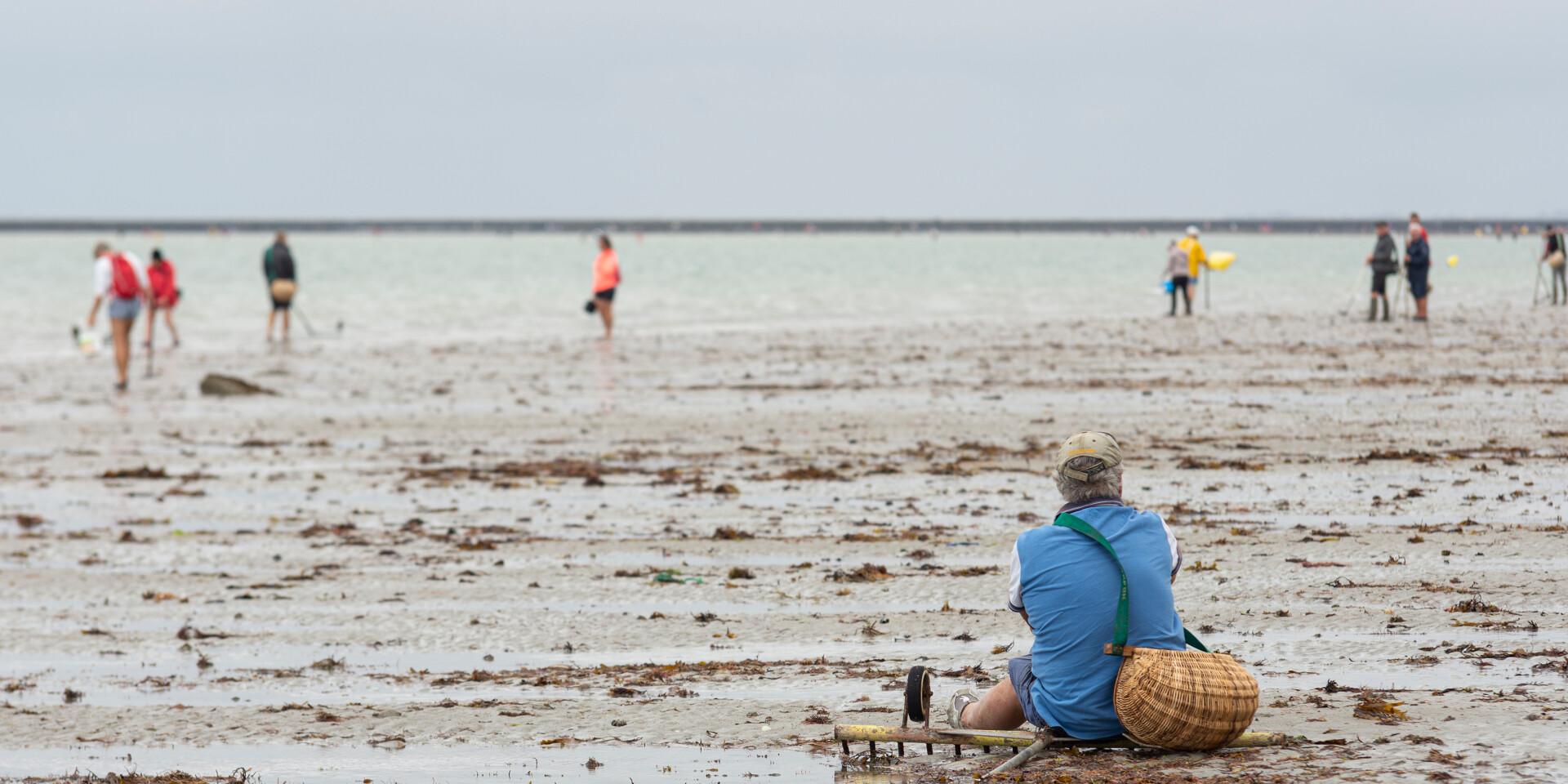
Peche A Pied Lors Des Grandes MareesPeche A Pied Lors Des Grandes Marees
©Peche A Pied Lors Des Grandes Marees|Pauline Vidinic
At Granville Terre et Merhigh tides are experiences to be had and a foreshore to be preserved

High tides are an experience to be had and a foreshore to be preserved

At Destination Granville Terre et Mer, the high tides punctuate the coastline, revealing spectacular landscapes twice a day, shaped by a tidal range of up to 14 metres. When the sea retreats, the foreshore is uncovered and becomes an area for observation, practice and experimentation: recreational fishing, contemplation of the landscape or supervised explorations and meetings with local people who are passionate about the marine environment. At high tide, the sea comes into its own again, offering other experiences such as cold-water swimming. From the bay of Mont-Saint-Michel to the Chausey archipelago, these highlights invite residents and visitors to experience spring tides in a different, sustainable way, while raising awareness of the need to preserve a living, fragile natural environment.

Published on 11 February 2026
Landscapes revealed by the rhythm of high tides

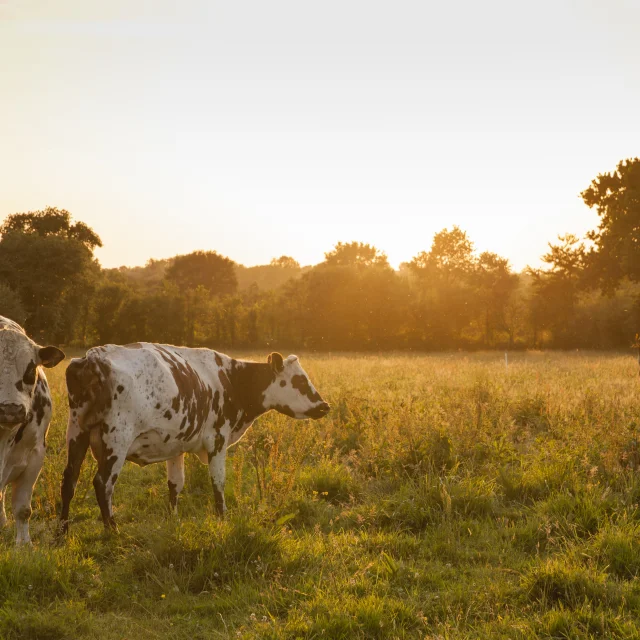
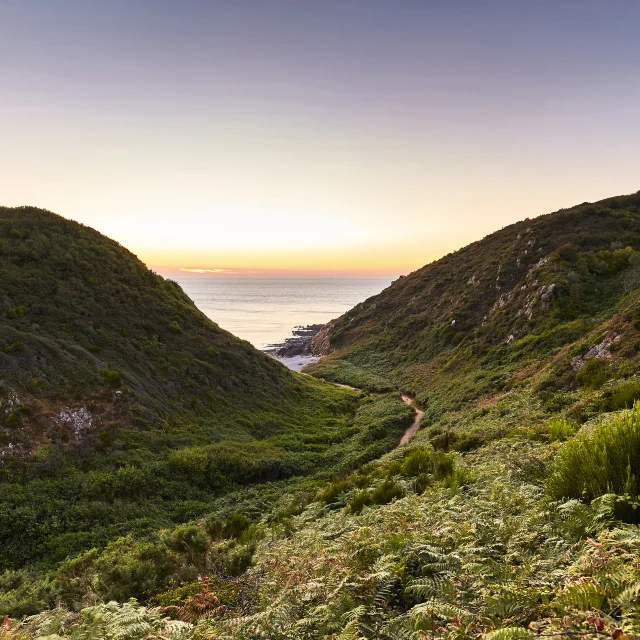
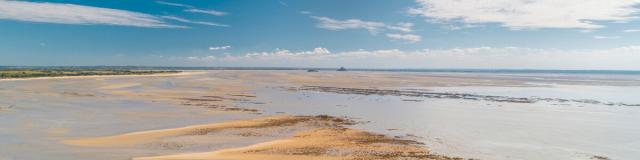
In Destination Granville Terre et Mer, the highest tides in Europe generate a tidal range of up to 14 metres, offering unique natural spectacles several times a day. Each time the sea recedes, the landscape changes: from the cliffs of Champeaux or Carolles, the completely uncovered bay becomes a vast open-air theatre, with Mont Saint-Michel enthroned in the middle.

Further offshore, almost nine miles from the coast, the Chausey archipelago reveals its full extent: up to 365 islets and rock heads emerge, creating a mineral landscape with an almost lunar appearance. Further north in the Destination, at Le Havre de la Vanlée, 8 Milles Nautic offers a different way of experiencing the high tides, aboard a kayak. This Granville Terre et Mer experience invites you to sail through the salt marshes when the tide covers salt meadows and roads, to observe a completely transformed landscape and fully experience the identity of the area. Only available at high tide, it offers a rare immersion experience in the heart of Granville Terre et Mer.
High tides: Experiences at both low and high tide

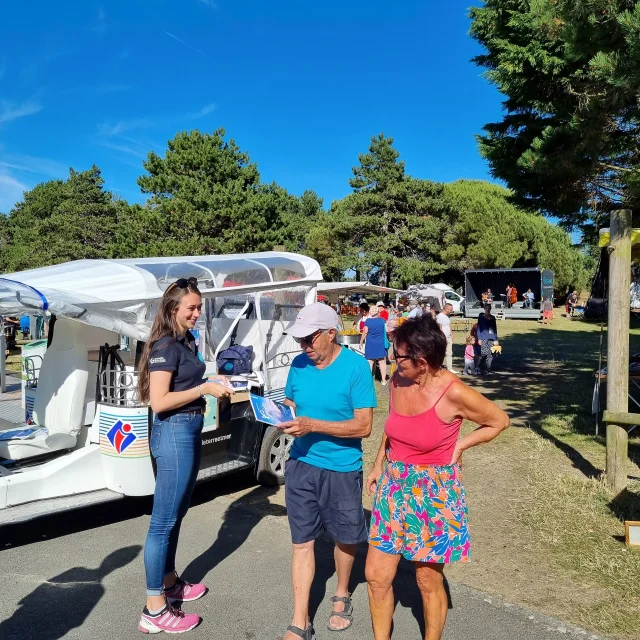
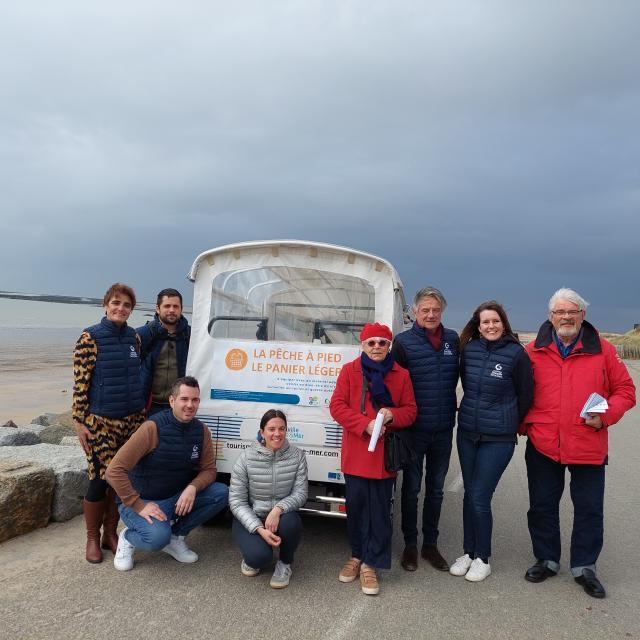
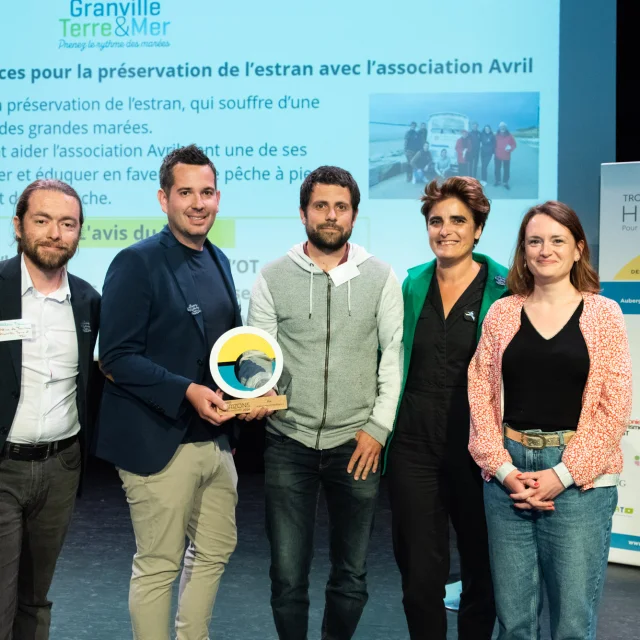
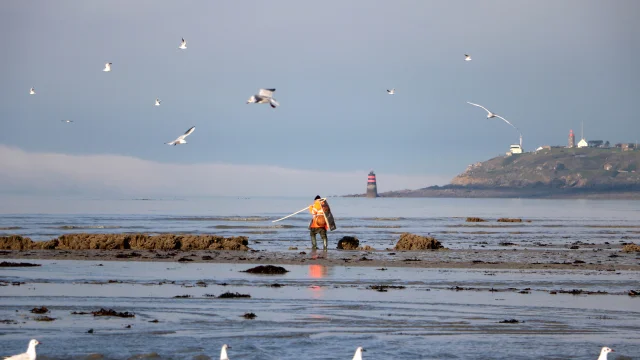
At Destination Granville Terre et Mer, high tides are a real experience. At low tide, the foreshore becomes a prime exploration area for responsible leisure fishing. Reading the sand, observing the life that hides there and understanding this living environment are all part of the experience. In Champeaux, the Avril Association introduces the public to clam digging “à la marque”, a traditional technique, also known as “finger and eye” digging, which involves spotting traces on the surface of the sand and extracting the shellfish without tools. Alongside local associations on the foreshore, tourist advisors from the Tourist Office also raise awareness of the presence of hermella reefs, fragile habitats that are essential to biodiversity and protected on the Champeaux site. At high tide, the experience continues in a different way. Opposite Granville Casino, members of the Au Bain Quotidien association invite visitors, winter and summer alike, to immerse themselves in the seawater pool, to experience the high tides in a sensory and invigorating way.

High tides: responsible practices for a preserved foreshore

To ensure that future generations can also enjoy these experiences with each passing tide, recreational fishing is practised in a sustainable way that respects the foreshore, a living and fragile environment. Here are a few useful tips for fishing on the foreshore: use suitable equipment (callipers to measure catches, landing nets, three-pronged claws or harvesting by hand), respect minimum sizes, quotas and authorised periods and areas. After each catch, the rocks must be carefully replaced to preserve the fauna sheltering there.

In Champeaux, particular attention is paid to the hermella reefs, which are remarkable and protected natural habitats. Fishing on foot is strictly forbidden: it is only permitted on the sandbanks, more than three metres from the hermelles. A prefectoral decree governs the protection of these reefs in the Bay of Mont Saint-Michel, guaranteeing the preservation of this unique ecosystem.

Other subjects covered